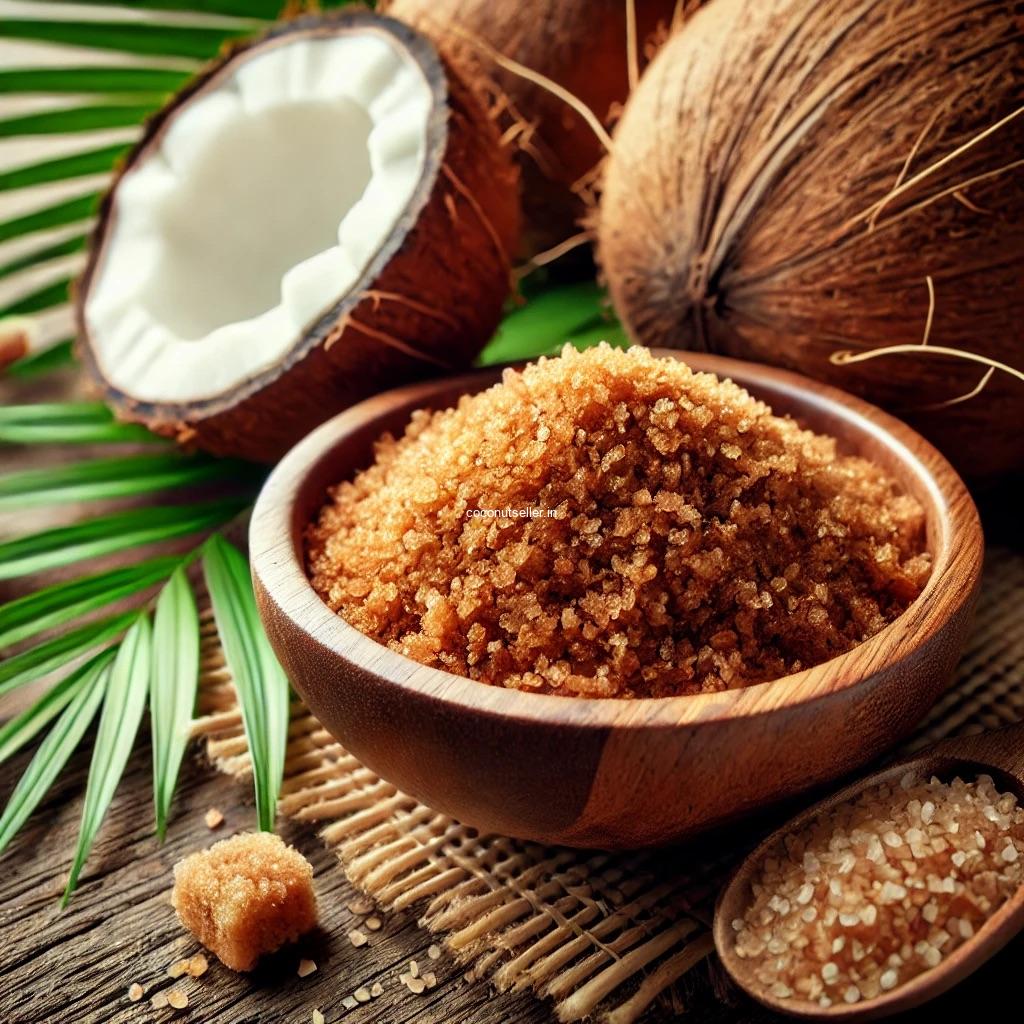
Coconut sugar, also known as coconut palm sugar, is made from the sap of the flower buds of the coconut palm tree. Here are some key points about coconut sugar:
- Production Process:
- The sap is collected from the flower buds of the coconut tree.
- The sap is then heated until most of the water evaporates, resulting in a thick syrup.
- This syrup is further reduced to produce granules or blocks of sugar.
- Nutritional Content:
- Contains small amounts of vitamins and minerals, including iron, zinc, calcium, and potassium.
- It also contains antioxidants and a type of fiber called inulin, which may help slow glucose absorption.
- Glycemic Index:
- Coconut sugar has a lower glycemic index (GI) compared to regular white sugar. Its GI is around 35, whereas white sugar’s GI is around 60-65. This means it may cause a slower rise in blood glucose levels.
- Flavor and Usage:
- Has a mild, caramel-like flavor, making it a good substitute for brown sugar in recipes.
- Can be used in baking, cooking, beverages, and as a sweetener for cereals and desserts.
- Environmental Impact:
- Harvesting coconut sugar is considered more sustainable than some other types of sweeteners because coconut palms require less water and resources to grow.
- Health Considerations:
- While it is considered healthier than refined sugar, it should still be consumed in moderation due to its sugar content.
- It is not suitable for those with coconut allergies.
Coconut sugar is appreciated for its natural production process and slightly better nutritional profile compared to regular sugar.