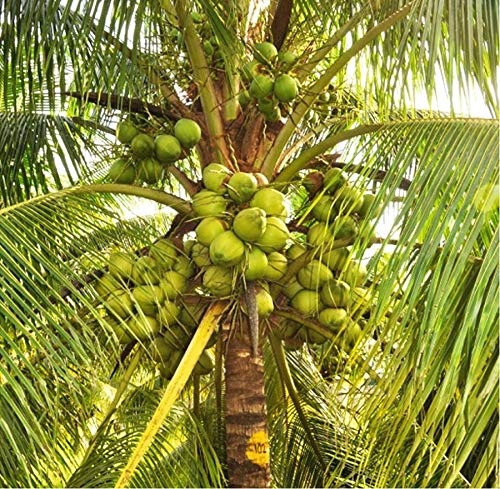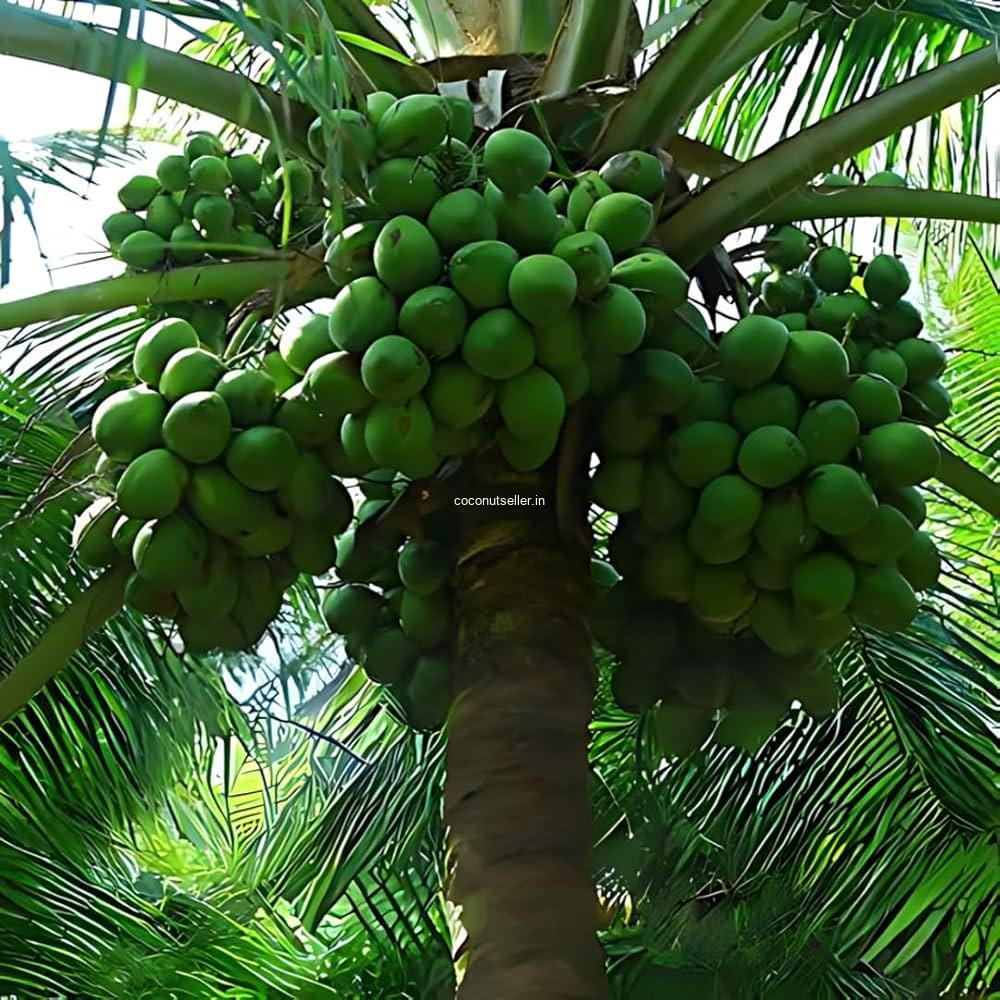
Hybrid coconuts are the result of cross-breeding different coconut varieties to produce a new variety with desirable traits, such as higher yield, faster growth, and improved resistance to diseases. Here’s a detailed overview of hybrid coconuts:
1. Types of Hybrid Coconuts:
- Tall x Dwarf Hybrids: These hybrids are created by crossing tall varieties (e.g., West Coast Tall) with dwarf varieties (e.g., Malayan Dwarf). They combine the robustness of tall varieties with the early bearing and compactness of dwarf varieties.
- Dwarf x Tall Hybrids: The reverse cross, where dwarf varieties are pollinated with tall varieties, also produces hybrids with beneficial traits.
2. Advantages of Hybrid Coconuts:
- Higher Yield: Hybrid coconuts often produce more nuts per palm compared to traditional varieties.
- Early Bearing: They generally start bearing fruits earlier, around 3-4 years after planting.
- Improved Resistance: Hybrids can have better resistance to pests and diseases.
- Better Copra Quality: The copra (dried coconut meat) from hybrids often has a higher oil content.
3. Cultivation of Hybrid Coconuts:
- Nursery Management: Hybrid seeds are germinated in nurseries with proper care until they are ready for transplanting.
- Planting: The seedlings are transplanted to the field when they are about 8-12 months old. Proper spacing, typically 7.5 to 9 meters apart, is essential.
- Soil and Climate: Like traditional varieties, hybrids thrive in well-drained sandy or loamy soils in tropical climates.
- Maintenance: Regular irrigation, fertilization, and pest management are crucial for optimal growth and yield.
4. Harvesting and Yield:
- Early Maturity: Hybrids start producing nuts within 3-4 years.
- Regular Harvests: Coconuts can be harvested every 2-3 months.
- High Productivity: Hybrids can yield 150-250 nuts per palm per year under good management practices.
5. Economic Benefits:
- Increased Income: Higher yields and early bearing contribute to increased income for farmers.
- Diversification: Hybrid coconuts provide opportunities for diversifying products, such as tender coconut water, coconut oil, and coir products.
6. Challenges:
- Initial Cost: Hybrid seedlings are more expensive than traditional varieties.
- Management Requirements: They require more intensive management and care.
- Genetic Diversity: Over-reliance on hybrids can reduce genetic diversity, which may affect long-term sustainability.
7. Popular Hybrid Varieties:
- Chowghat Orange Dwarf x West Coast Tall (COD x WCT): Known for high yield and good quality copra.
- Malayan Yellow Dwarf x West Coast Tall (MYD x WCT): Popular for tender coconut water production.
- GBGD x PHOT: Known for high oil content and resistance to root wilt disease.