Here’s a clear, practical breakdown of desiccated coconut (DC) powder processing, written from an industry + export point of view (useful if you’re planning SOPs or a small/medium unit).
🌴 Desiccated Coconut Powder – Processing Flow
1️⃣ Raw Coconut Selection
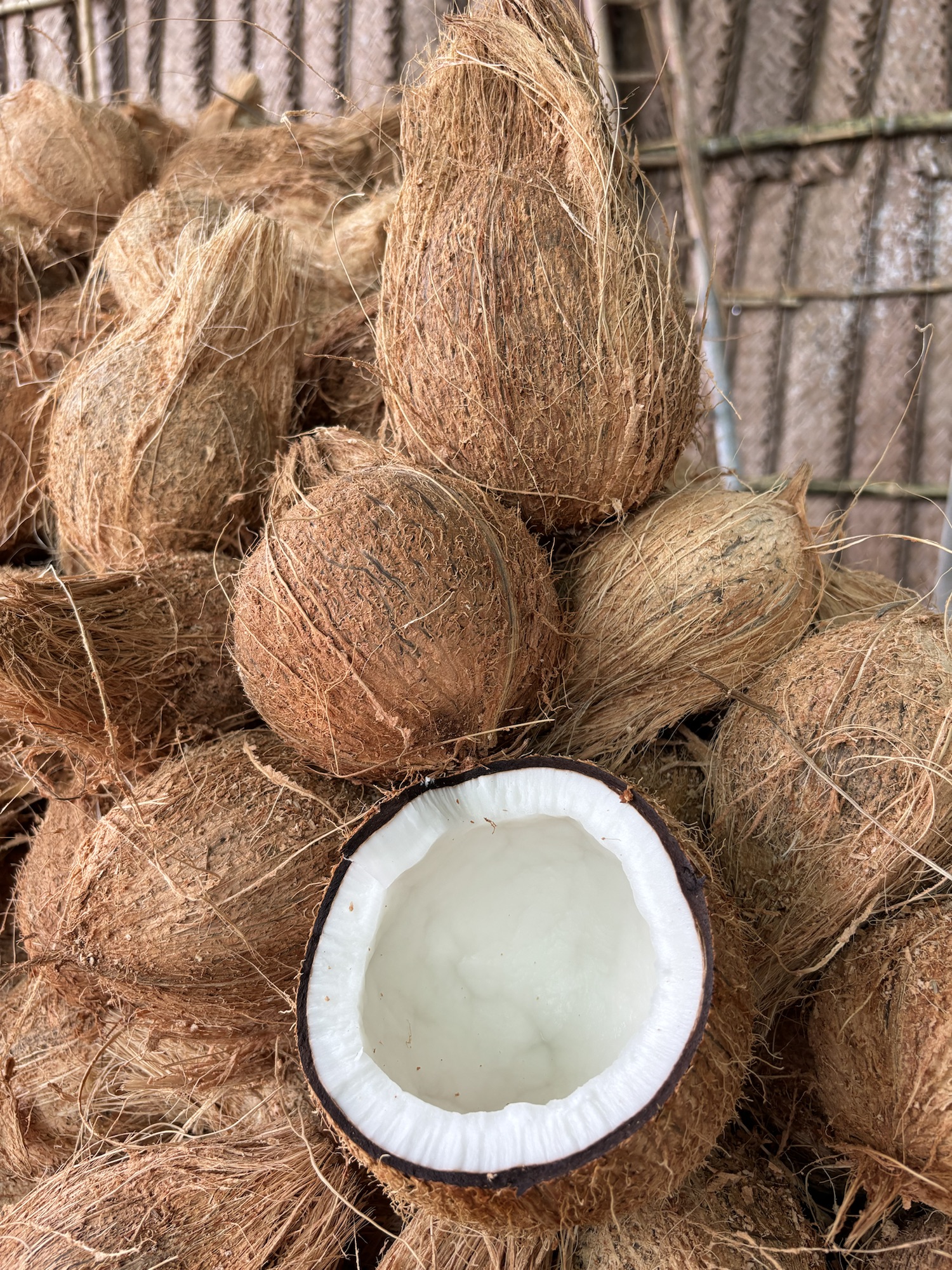
- Type: Fully matured coconuts (11–12 months)
- Shell: Hard, brown
- Water content: Low
- Oil content: 62–68%
- Reject: Sprouted, cracked, moldy, sour-smelling nuts
👉 1,000 coconuts ≈ 170–190 kg DC powder
2️⃣ Dehusking & Deshelling
- Mechanical or manual
- Remove husk → break shell
- Collect white kernel only
3️⃣ Paring (Brown Skin Removal)
- Remove testa (brown skin)
- Done using:
- Hand paring knives (small units)
- Mechanical paring machine (commercial units)
🎯 Improves whiteness & export grade
4️⃣ Washing & Sanitizing
- Wash kernels in potable water
- Optional food-grade sanitization:
- Chlorinated water (50–100 ppm)
- OR ozone-treated water
⛔ Avoid excess soaking → affects oil & flavour
5️⃣ Size Reduction (Grating / Milling)
Depending on final product:
- Fine DC powder
- Medium grade
- Extra fine / flour
Machines used:
- Coconut grater
- Hammer mill / pin mill (for powder)
6️⃣ Blanching (Critical Step)
Purpose:
- Enzyme inactivation
- Microbial reduction
- Colour retention
Method:
- Hot water or steam blanching
- Temperature: 85–95°C
- Time: 3–5 minutes
7️⃣ Drying
Target moisture: ≤ 3%
Drying methods:
- Tray dryer
- Hot air dryer
- Continuous belt dryer (large plants)
Drying parameters:
- Temperature: 60–70°C
- Time: 4–6 hours (depends on thickness & particle size)
⚠ Over-drying → burnt flavour
⚠ Under-drying → fungal growth
8️⃣ Cooling
- Cool to room temperature before packing
- Prevents condensation inside packs
9️⃣ Sieving & Grading
- Remove lumps
- Uniform particle size
- Grades:
- Fine (bakery)
- Extra fine (infant food / confectionery)
- Medium (household / horeca)
🔟 Metal Detection
- Mandatory for export
- Detects iron, SS, non-ferrous metals
1️⃣1️⃣ Packaging
Common packs:
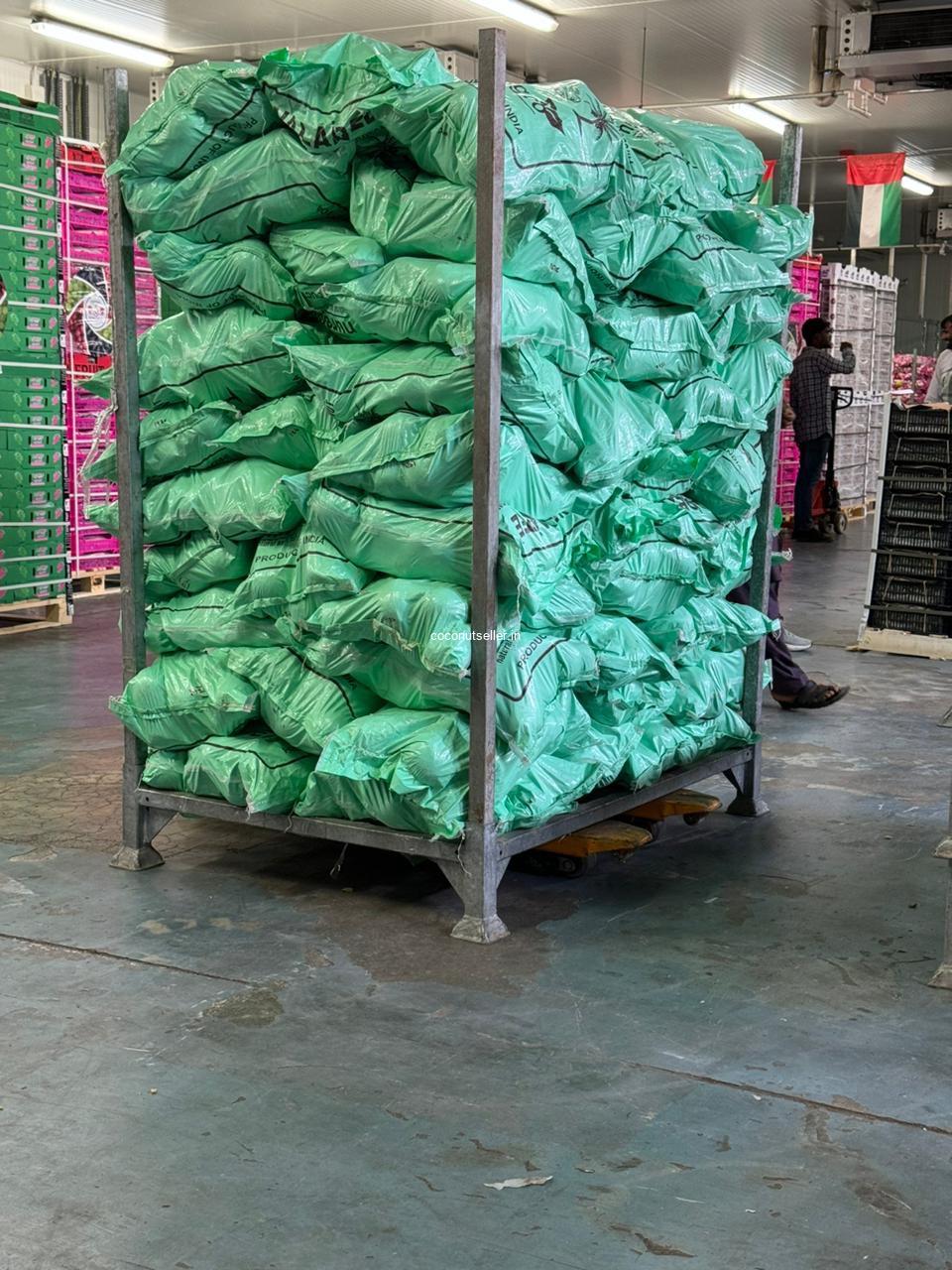
- 25 kg poly-lined kraft bags (bulk)
- 1 kg / 500 g / 200 g laminated pouches (retail)
Shelf life:
- 9–12 months (ambient, dry conditions)
🧪 Quality Parameters (Typical Export Specs)
| Parameter | Value |
|---|---|
| Moisture | ≤ 3% |
| Fat | 62–68% |
| FFA | ≤ 0.3% |
| Colour | Snow white |
| Taste | Fresh, nutty |
| E. coli | Absent |
| Salmonella | Absent |
| Yeast & Mold | < 100 cfu/g |
🏭 Machinery List (Small–Medium Unit)
- Dehusker
- Shell breaker
- Paring machine
- Washer
- Coconut grater
- Blanching tank
- Dryer
- Pulverizer (for powder)
- Sieve
- Metal detector
- Weighing & packing machine
📜 Certifications Needed (India)
- FSSAI
- GST
- Udyam
- IEC (for export)
- HACCP / ISO 22000 (export buyers)
- APEDA (recommended)
💡 Yield & Cost Insight
- 1 MT fresh coconut kernel → 300–320 kg DC powder
- Major cost factors:
- Raw coconut price
- Electricity (drying)
- Labour
- Packaging
- Quality testing